
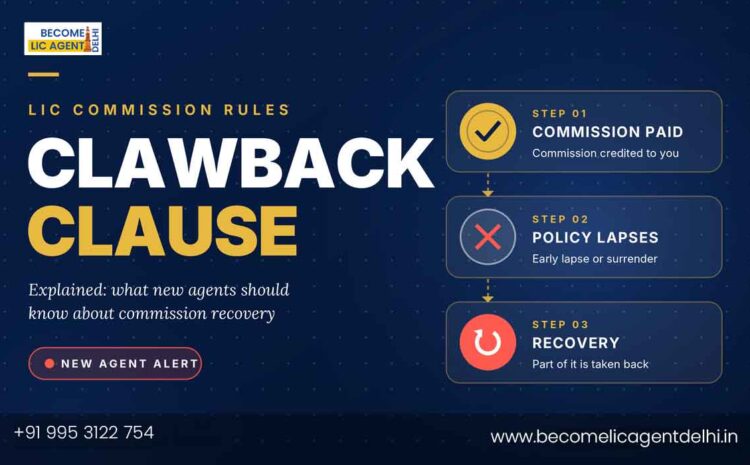
LIC Clawback Clause Explained: What New Agents Should Know About Commission Recovery
Starting an insurance career often brings questions about earnings, commissions, and financial responsibilities. One concern new candidates may come across is the LIC clawback clause. It raises an important question: can an insurance agent be asked to return commission already earned on a policy?
For anyone planning an LIC agent career, understanding this subject is important before entering the profession. Clawback generally refers to recovering money already paid under specific conditions. However, a proposed provision and an implemented policy are not the same thing.
What Does the LIC Clawback Clause Mean?
A clawback clause allows an organization to recover payments already made when certain conditions are not fulfilled. In insurance distribution, this could involve recovering commission under specified circumstances.
The discussion around LIC’s clawback provision gained attention after changes to life insurance product regulations in 2024. These changes affected commission structures and surrender benefits. However, they did not automatically mean that agents had to return their earnings whenever a policyholder discontinued a policy.
Has LIC Implemented Commission Recovery?
This is an important distinction for anyone considering an LIC agent career.
During an investor interaction in November 2024, LIC Chairman Siddhartha Mohanty clarified that clawback was an enabling provision and LIC did not expect to implement it. The government also clarified in Parliament that LIC had not issued any instruction regarding clawback of commission.
Therefore, new agents should not assume that LIC automatically recovers commission whenever a policy lapses, is surrendered, or is discontinued.
It is still sensible to check the latest official guidelines because insurance regulations and commission arrangements can change.
When Can an Agent Face Financial Recovery?
Although the clawback discussion should not cause unnecessary concern, agents must understand their professional responsibilities. The LIC (Agents) Regulations, 2017, contain provisions addressing losses caused by an agent’s misconduct or violation of the prescribed code of conduct.
Some situations that require attention include:
- Misleading information: Giving customers incorrect details about policy benefits or returns can lead to complaints and disciplinary action.
- Unsuitable recommendations: Suggesting a plan without considering the customer’s financial capacity can create problems later.
- Mis-selling: Hiding exclusions or making unrealistic promises can violate professional conduct requirements.
- Incorrect documentation: Submitting inaccurate information can affect policy processing and customer trust.
How Can New Agents Protect Their Commission Earnings?
Building a reliable income requires more than bringing in new policy applications. Agents must maintain customer relationships and help policyholders understand their commitments.
Here are some useful practices:
- Understand each product: Learn the premium amount, policy term, exclusions, and benefits before recommending a plan.
- Check affordability: Discuss the customer’s financial situation instead of focusing only on completing a sale.
- Explain policy conditions: Make sure customers understand premium commitments, grace periods, and surrender rules.
- Maintain communication: Follow up before premium due dates and help customers with servicing queries.
- Keep accurate records: Follow LIC’s documentation requirements and maintain proper customer information.
Become LIC Agent: What Should You Know Before Starting?
If you want to become LIC agent, understanding commission rules and professional responsibilities is a useful first step. The profession involves more than completing registration formalities.
New candidates should understand the applicable commission structure, learn about different insurance products, and prepare for customer-facing responsibilities. LIC Agent Training also helps candidates develop the knowledge needed to explain policies and address customer questions.
Before starting, speak with the concerned LIC office or development officer to understand the current eligibility requirements, registration process and applicable commission rules.
Is the LIC Clawback Clause a Reason to Avoid This Career?
No. The clawback discussion alone should not discourage aspiring agents. LIC and the government have clarified that no general instruction for commission clawback has been issued.
However, anyone entering this profession should stay informed about official guidelines and avoid making assumptions about future earnings.
A sustainable LIC agent career depends on product knowledge, honest recommendations, and consistent customer support. If you are interested in this opportunity, Become LIC Agent Delhi can help you understand the process and take your first steps towards joining LIC.
FAQs
Does an LIC agent earn commission on every policy sold?
Commission eligibility depends on the applicable product rules and the agent’s contractual terms.
Can an LIC agent lose their agency due to customer complaints?
Yes, serious or repeated violations of professional conduct can lead to disciplinary action, including termination.
Do LIC agents need to track policy renewals after completing a sale?
Yes, following up on renewals helps agents support policyholders and maintain long-term customer relationships.
Can an LIC agent continue earning after building a large customer base?
Yes, eligible renewal commissions can provide continuing earnings from policies that remain in force, subject to applicable rules.